Good service is mostly invisible. At Trattoria Square it means a table that is ready when you arrive, a menu that can be explained rather than recited, water that is refilled before it is empty and a course that arrives when the last one has settled. The team reads the room rather than a schedule, so lunch can stay quick and dinner can take its time.
A visit starts before the food arrives: with the greeting at the door, the walk through the room and the moment the table is pulled out. Those first minutes set the pace for everything after them. At Trattoria Square the aim is simple — to make the room feel familiar quickly, without rushing anyone into an order.
The menu
Explained, not recited
The service team knows what is on the menu, what has just come off it and what the kitchen can adapt. Questions about a dish, a wine or a dietary requirement are answered from that knowledge rather than a script, which is why the restaurant menu is worth reading before you arrive.
The room
A setting that does half the work
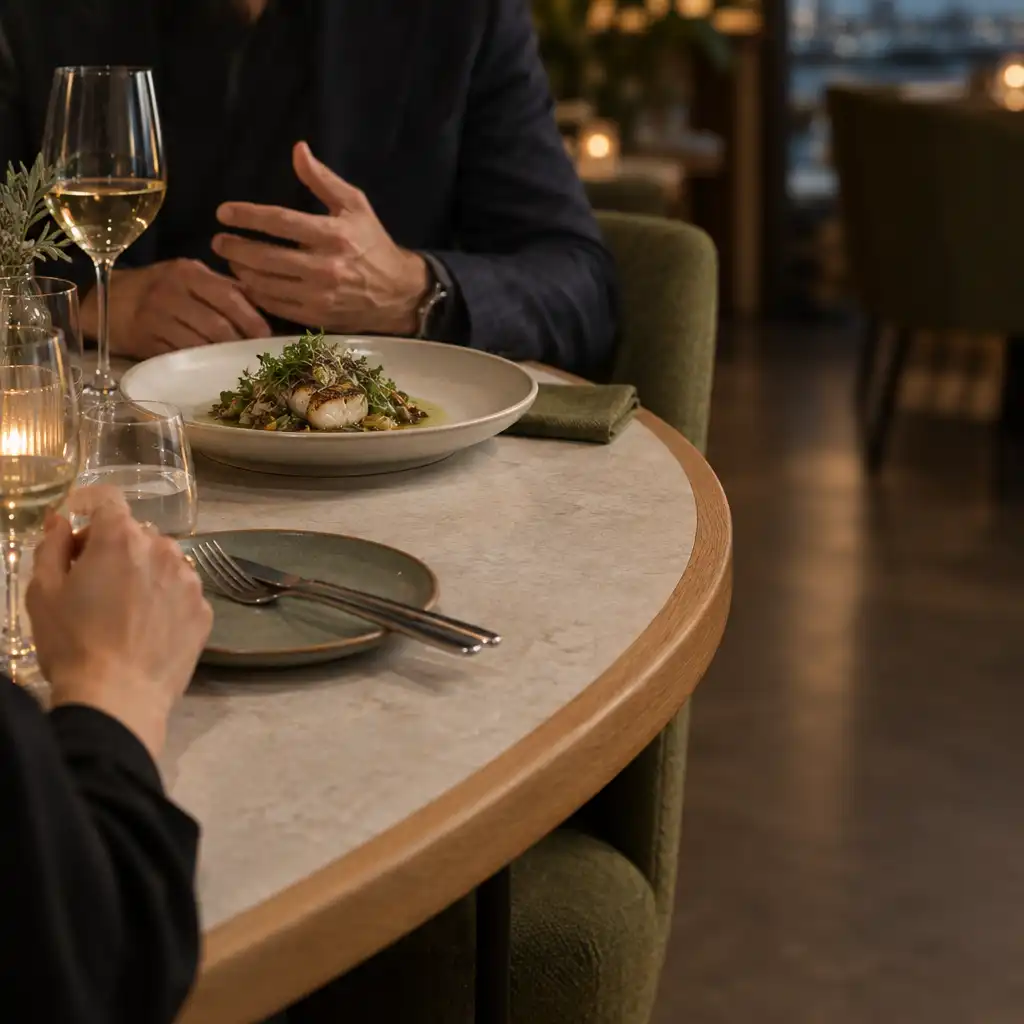
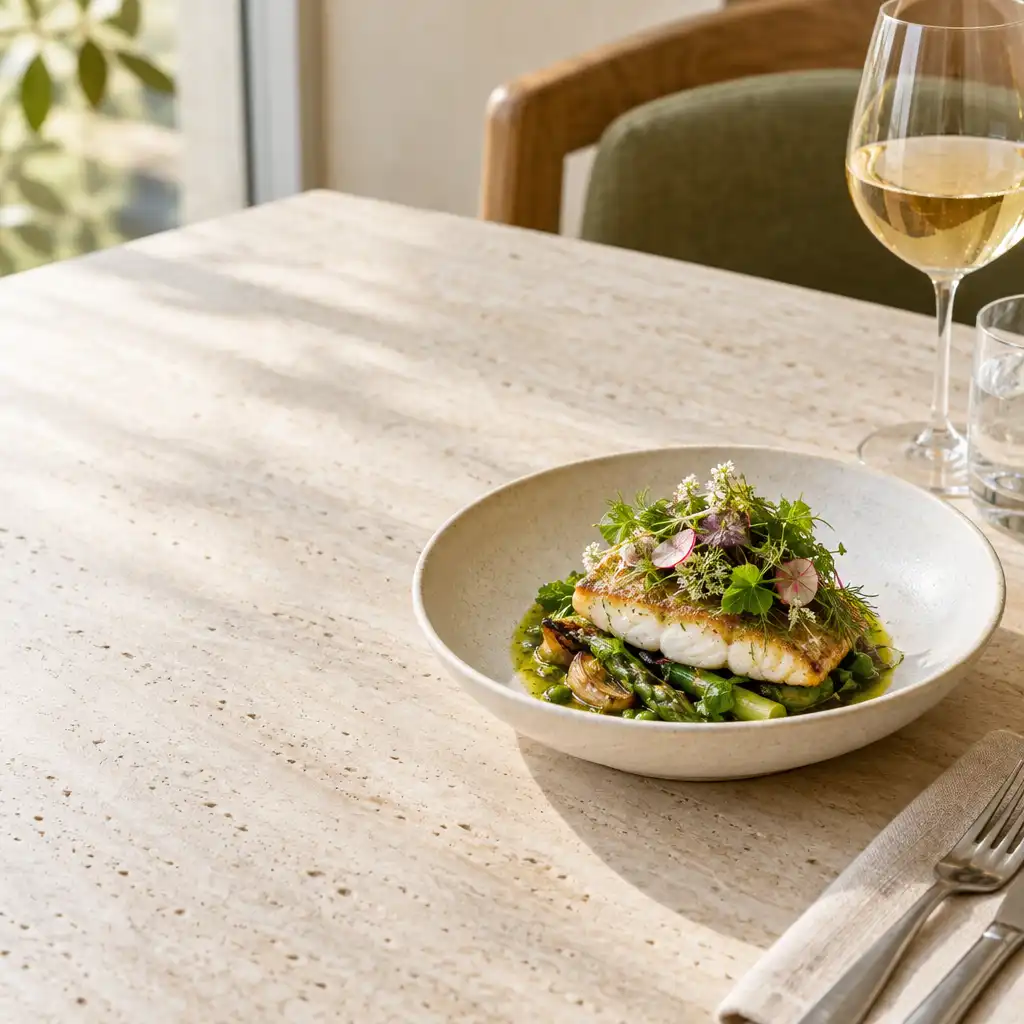
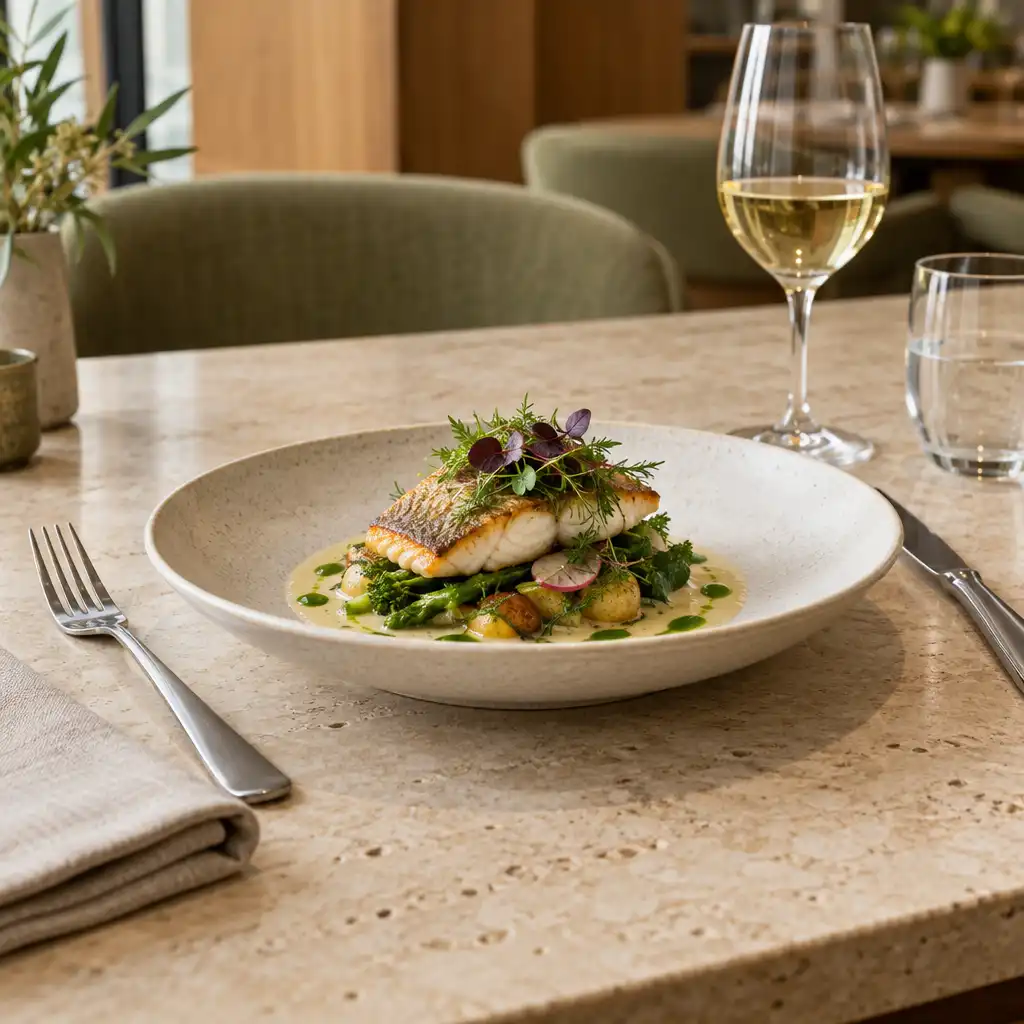
Pale stone, warm oak, olive upholstery and brushed steel keep the room calm, so service can stay quiet. Tables are spaced for conversation, chairs are easy to move, and the light settles low enough in the evening that no one has to raise their voice.
How the evening runs
Timing is the whole craft
A plate should arrive when the table is ready for it, not when the kitchen is. That means watching the room: how quickly a course has been eaten, whether glasses need attention, whether a table is deep in conversation or ready to move on. Service here is organised around those signals, which is why there is no fixed turn at the table and no pressure to order everything at once.
“The best service is the part of the evening you never have to think about.”
01
Before you ask
Water, bread and the wine list arrive without a request. Small things are handled early so the table is never waiting on them.
02
Knowledge at the table
Recommendations come from what the kitchen is working with that week, not from a list that was printed months ago.
03
Room to talk
Courses are paced around the conversation. A pause between plates is treated as part of the meal, not as a delay.
One visit, several kinds of care
01 Arrival
Seated and settled
Bookings are held and prepared before you arrive. The table is set, the room is ready and the team already knows about any dietary note or occasion attached to the booking. From there the visit begins at the table rather than at the door.
Throughout the meal the room is read continuously: plates cleared only when everyone has finished, glasses topped up without interrupting, and the pace adjusted if a table wants to linger or needs to leave. Larger tables and the private room are briefed in the same way.
Service in a room like this is mostly a matter of positioning. The team works the floor so that every table is in someone’s line of sight without anyone standing over it. Empty plates are noticed, water is topped up, and a guest looking up is usually met by someone already on the way. None of it is meant to be noticed; all of it is meant to keep the meal moving at the table’s own speed.
01
Discretion
Conversations are left alone. Service happens at the edges of the table, not through the middle of it.
02
Consistency
The same standard applies at lunch, at dinner and in the private room, whoever is working the floor.
03
Clarity
Questions about a dish, an ingredient or a dietary need are answered directly and checked with the kitchen when needed.
04
Pace
A quick lunch is served quickly. A long dinner is allowed to run. The table decides which one it is.
At the table
Considered, attentive, unhurried
01
Dietary needs are kitchen information
Allergies and requirements are passed to the kitchen, not handled at the table from memory. Tell the team when you book and again when you sit down, and the detail of each dish will be checked before the order is taken.
02
Recommendations are specific
Questions are answered with a real recommendation: what is good this week, what suits the course, what pairs with the glass already on the table. The team tastes the menu and knows the list, so advice is useful rather than generic.
03
The table sets the pace
A table in a hurry is served in a hurry; a table settling in is left to settle. Courses are not sent early to free a seat, and no one is asked to finish before they are ready. Private dining follows the same approach at a larger scale.
48 High Street, Auckland Central, Auckland 1010, New Zealand
Plan from the restaurant out. Trattoria Square is a New Zealand restaurant where the booking is the clear first step: choose a date, tell the team about any dietary requirement or occasion, and the room will be prepared around it. From there the menu, the interiors and the pace of the meal can be shaped to suit the visit.
Make a table booking for a contemporary Auckland dining experience shaped by considered food, a composed room and service that keeps its distance until it is needed. The restaurant remains at the heart of the visit, from the first greeting to the last glass.